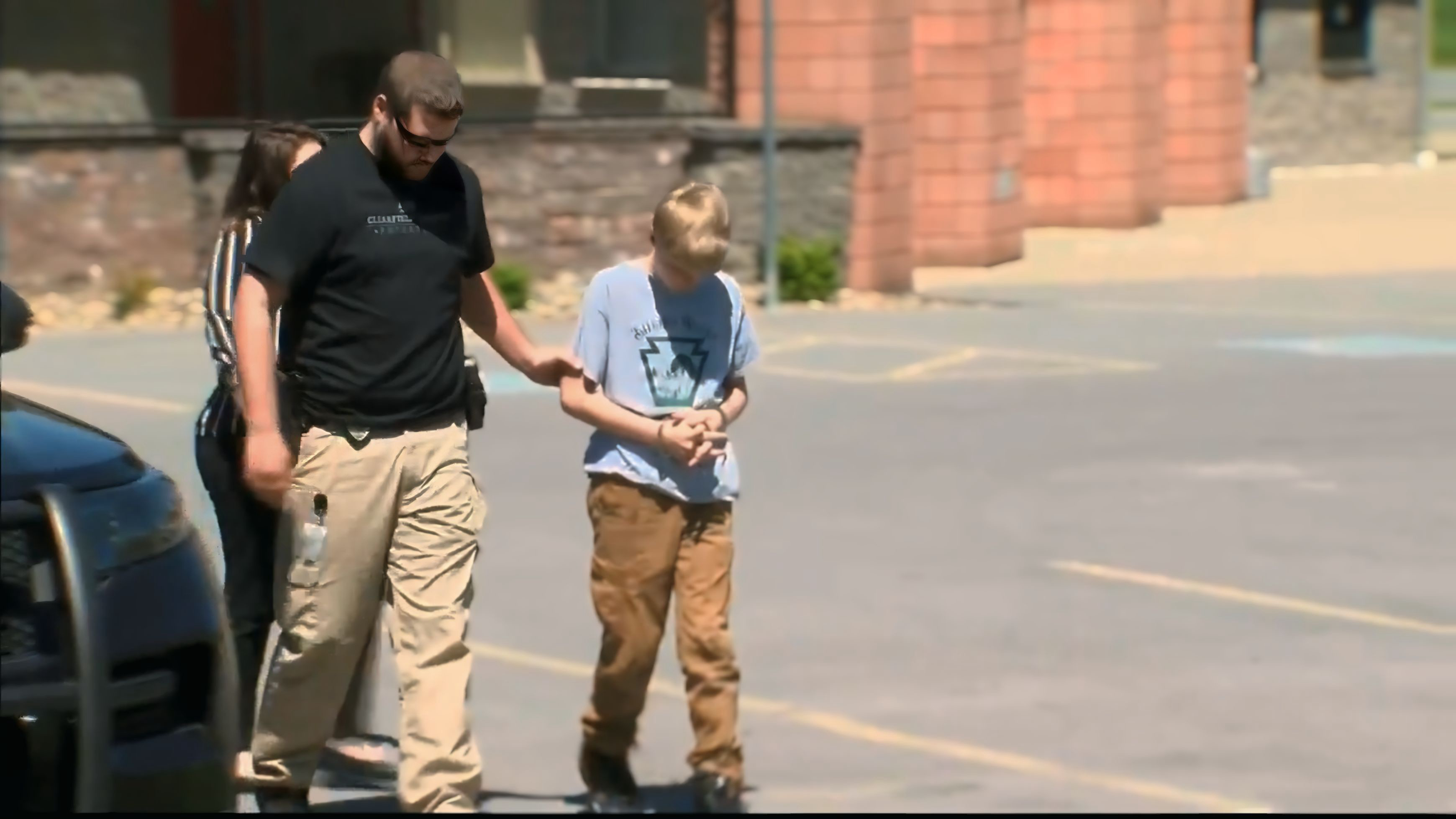
CLEARFIELD: The Pennsylvania Superior Court has upheld a decision transferring a high-profile Clearfield County homicide case involving a 14-year-old boy to juvenile court, rejecting the Commonwealth’s appeal and affirming that the case should not proceed in adult criminal court.
Aaron John Klingensmith of Luthersburg was 14 years old when he allegedly shot and killed a 12-year-old girl at his Brady Township home on April 28, 2024. The girl later died from a gunshot wound to the head on May 1 at UPMC Children’s Hospital in Pittsburgh. The autopsy listed the manner of death as homicide.
Initial Charges And Hearing
Shortly after charges were filed, Clearfield County District Attorney Ryan Sayers announced that Klingensmith had been charged as an adult, citing the seriousness of the incident.
“This is a heartbreaking and tragic shooting that occurred on Sunday evening in Brady Township,” Sayers said at the time. “In the interest of justice, the difficult decision was made to charge this juvenile as an adult, instead of remaining in the juvenile system.”
During a preliminary hearing in May 2024, testimony from Pennsylvania State Police Trooper Lauren Strishock detailed the events leading up to the shooting. According to her testimony, Klingensmith told investigators that he and the girl were at his home when he asked her if she wanted to see his father’s gun. He retrieved the firearm from the top of a gun cabinet in the living room, sat beside her on the couch, pointed the gun at her, asked whether it was “loaded or unloaded,” and then pulled the trigger.
Following that hearing, District Judge Jerry Nevling ruled that all charges — including criminal homicide, two counts of aggravated assault, and recklessly endangering another person — be bound over to county court.
Motion To Transfer To Juvenile Court
In September 2024, Klingensmith’s attorney, Chris Pentz, filed a motion requesting that the case be transferred to juvenile court. The motion followed a psychiatric evaluation conducted in August by psychologist Dr. Veronique Valliere.
President Judge Fredric J. Ammerman later granted the petition, ruling that it was in the public’s interest to decertify the case and move it to juvenile court.
In his written opinion, Ammerman concluded that Klingensmith “does not present as a threat to public safety.” The court noted that he had no prior criminal history, no previous delinquent acts, no behavioral issues, and no antisocial personality traits, aside from a diagnosis of attention deficit disorder.
Dr. Valliere described the incident as “a really stupid thing an impulsive teenager did to show off,” rather than an intentional act of murder. She reported that Klingensmith was honest during her evaluation and “broke down crying when discussing what he had done.” Valliere found no risk factors suggesting future violent behavior and stated that Klingensmith harbored no hostility toward the victim and had no reason to target or harm her.
Court documents also noted that Klingensmith appeared regretful and did not seem to fully grasp that the victim — a friend — was deceased and that he would never be able to speak with her again.
Because of his age, the court determined Klingensmith would have up to seven years available for therapy, discipline, and rehabilitation within the juvenile justice system.
“The juvenile is young and still a bit immature and does not seem to grasp the gravity of what has happened,” the court wrote. “He does not show the mental capacity a dangerous or repeating offender may have. Additionally, the juvenile did not commit a crime that involved any real level of criminal sophistication. He believed the weapon was unloaded, pulled the trigger spur of the moment, and the actions he took were described as a tragic accident.”
Appeal And Superior Court Ruling
The Commonwealth appealed Ammerman’s ruling, arguing that Klingensmith’s actions were intentional and that the case should remain in adult court. Prosecutors also argued that the judge’s decision was issued beyond the required 20-day deadline following the hearing.
In a decision issued last week, the Superior Court rejected both arguments.
The court ruled that Ammerman properly weighed all statutory factors and did not abuse his discretion in determining that Klingensmith was amenable to treatment within the juvenile system. The Superior Court found Dr. Valliere’s testimony to be credible and concluded that the transfer was in the public’s interest.
“As the trial court did not abuse its discretion in weighing the statutory factors, and the Commonwealth’s arguments are otherwise without merit, the order transferring the case to the juvenile division must be upheld,” the ruling stated.
Regarding the timing issue, the Superior Court acknowledged that the trial court’s decision came after the 20-day deadline but ruled that the delay resulted from a breakdown in court operations. The court noted that during a Nov. 25, 2024 hearing, the Commonwealth requested additional time to file briefs, which the judge granted. The Superior Court ruled that the appropriate remedy was to excuse the untimeliness and give the transfer order its intended effect.
Commonwealth Response
Following the original ruling transferring the case, District Attorney Sayers stated that prosecutors disagreed with the decision and believed it was not in the public interest — a position that ultimately did not prevail on appeal.
With the Superior Court’s decision, the case will now proceed in juvenile court.