CLARION: A Clarion resident who was previously enrolled in a behavioral health court program as part of a diversionary approach to sentencing has now been formally sentenced after failing to complete the program’s requirements.
Sentencing and Legal Proceedings
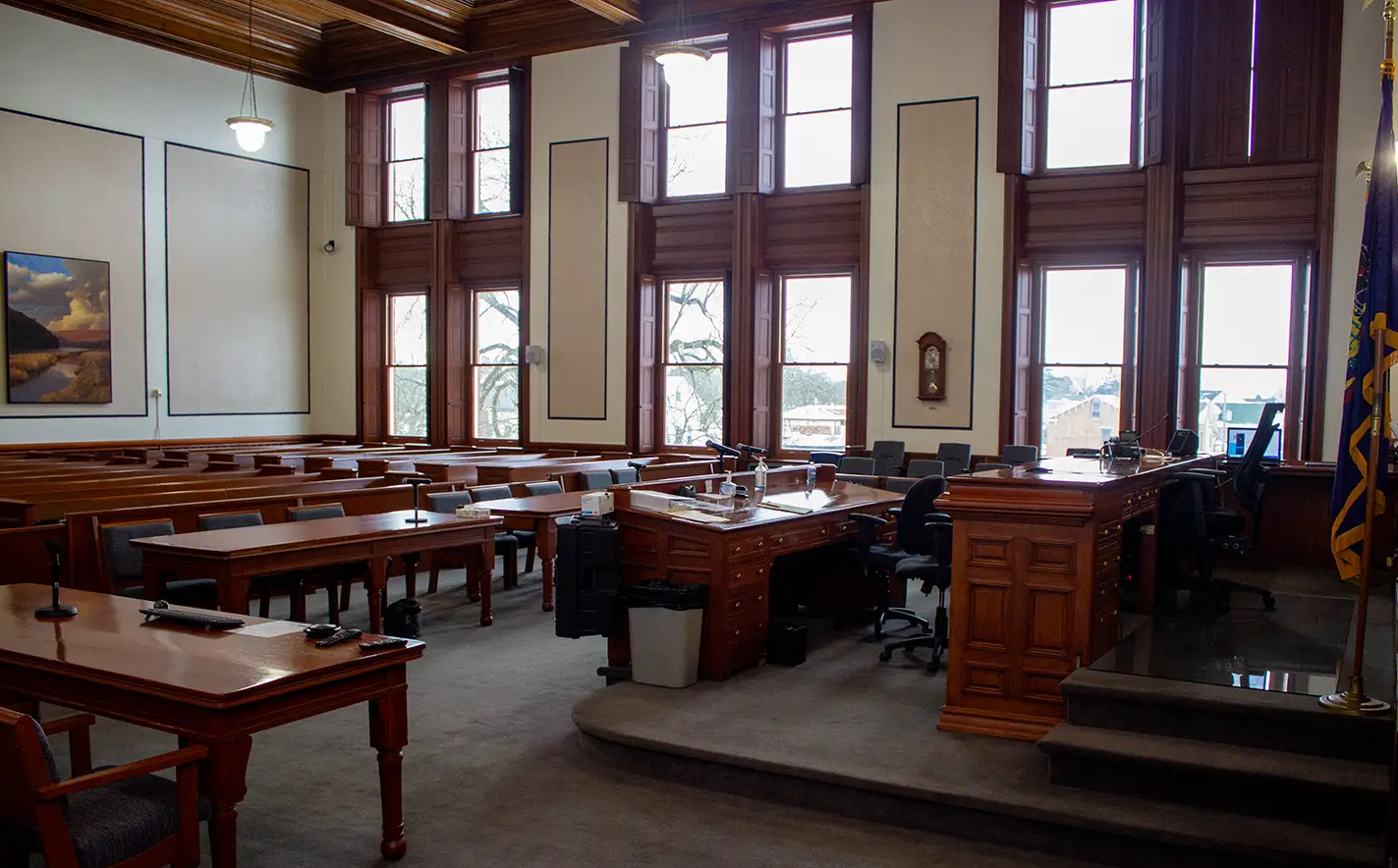
On March 26, Todd Clinger, a 52-year-old Clarion man, appeared before President Judge Sara J. Seidle-Patton in the Clarion County Court of Common Pleas, where he received a sentence of 90 days to two years less one day in county jail. This sentence was issued after Clinger pleaded guilty to a first-degree misdemeanor charge of stalking.
However, given the 266 days he had already spent in detention while awaiting case resolution, Clinger was granted parole on the same day, effectively concluding his immediate incarceration. Despite his release, Clinger remains subject to strict judicial conditions, including a legally binding no-contact order that prohibits him from engaging in any form of communication or interaction with the victim.
Clarion County District Attorney Drew Welsh represented the prosecution, while Chief Public Defender Jacob Roberts provided legal defense for Clinger throughout the proceedings.
Failure to Complete Behavioral Health Court Program
Court records reveal that Clinger originally pleaded guilty to three separate charges in July 2023, at which time he was admitted into the behavioral health court program. This initiative serves as an alternative to conventional sentencing for individuals with mental health challenges, emphasizing rehabilitation over punitive measures. Participants in the program are required to comply with structured treatment plans, regular court appearances, and additional conditions tailored to their circumstances.
Despite being given this opportunity, Clinger was ultimately removed from the program after failing to meet its mandated requirements. Following his expulsion from the program, he was reprocessed through the standard criminal justice system. As a result, only one charge—stalking—proceeded to sentencing, while the remaining charges were nolle prossed, meaning they were formally dismissed and would not be pursued further in court.
Incident Leading to Arrest
The legal proceedings against Clinger originated from an incident that occurred on December 5, 2023, when officers from the Clarion Borough Police Department responded to a stalking complaint at a business located on Main Street in Clarion Borough.
According to the official criminal complaint, the victim had previously instructed Clinger to stay away from the premises. However, he disregarded this directive and returned to the location. Law enforcement officers, led by Detective Roger E. Wright, arrived at the scene and found Clinger in close proximity to the business. He was identified based on the description provided by the complainant.
At the time of his arrest, Clinger was reportedly wearing a black leather jacket featuring a Superman logo, a red hooded sweatshirt, and carrying a backpack. Initially, he denied having been at the business, claiming instead that he had recently visited the magistrate’s office. He later amended his statement, asserting that his stepdaughters frequent the property in question.
Upon conducting a search, officers discovered court documents in Clinger’s possession that pertained to previous charges involving the same victim. Additionally, a witness at the scene confirmed seeing Clinger loitering on the property shortly before law enforcement arrived.
Legal Implications and Broader Context
Under Pennsylvania law, stalking constitutes a serious criminal offense that can be charged as either a misdemeanor or a felony, depending on the severity of the circumstances. Stalking is legally defined as engaging in a course of conduct or repeatedly communicating with another individual in a manner that causes substantial emotional distress or fear of harm. Given the history of prior legal actions taken against Clinger, his sentencing reflects the gravity of repeated violations despite prior judicial warnings.
Behavioral health court programs are designed to provide individuals with mental health conditions an alternative pathway through the justice system, prioritizing treatment and rehabilitation over incarceration. Successful completion of such programs often results in reduced sentencing or, in some cases, full dismissal of charges. However, failure to adhere to program requirements, as seen in Clinger’s case, results in the reinstatement of traditional criminal penalties.
Next Steps and Ongoing Court Supervision
Although Clinger has been granted parole, he remains under judicial supervision and must fully comply with all sentencing conditions imposed by the court. The most critical requirement is his adherence to the no-contact order, which explicitly forbids him from initiating any form of communication with the victim. Violating this order or any other conditions of his parole could result in further legal consequences, including the possibility of revocation of parole and potential re-incarceration.
This case underscores the legal system’s efforts to balance rehabilitation opportunities with accountability, ensuring that individuals who fail to comply with diversionary programs still face consequences under the law.
For continued updates on this case and other legal matters within Clarion County, stay informed through DuBoisLIVE.